Technology overview · Case study: depot-based refuelling
Technology overview
Hydrogen FCEVs are essentially electric buses (hence Fuel Cell Electric Vehicle), but with energy stored in compressed hydrogen tanks rather than in batteries, extending daily range up to 500km. A fuel cell electric bus powertrain typically comprises of a fuel cell stack and storage tanks, in combination with batteries or super-capacitors. FCEVs also have regenerative braking to recoup energy in the same way as BEVs.
Fuel cells are electrochemical cells that convert the chemical energy stored in a fuel (in this case hydrogen) and oxygen (taken from the air) into electrical energy. To achieve sufficient electrical power to propel a vehicle, multiple cells must be compiled into a fuel cell ‘stack’. The leading fuel cell type for automotive applications is the polymer electrolyte membrane fuel cell or “PEM”.
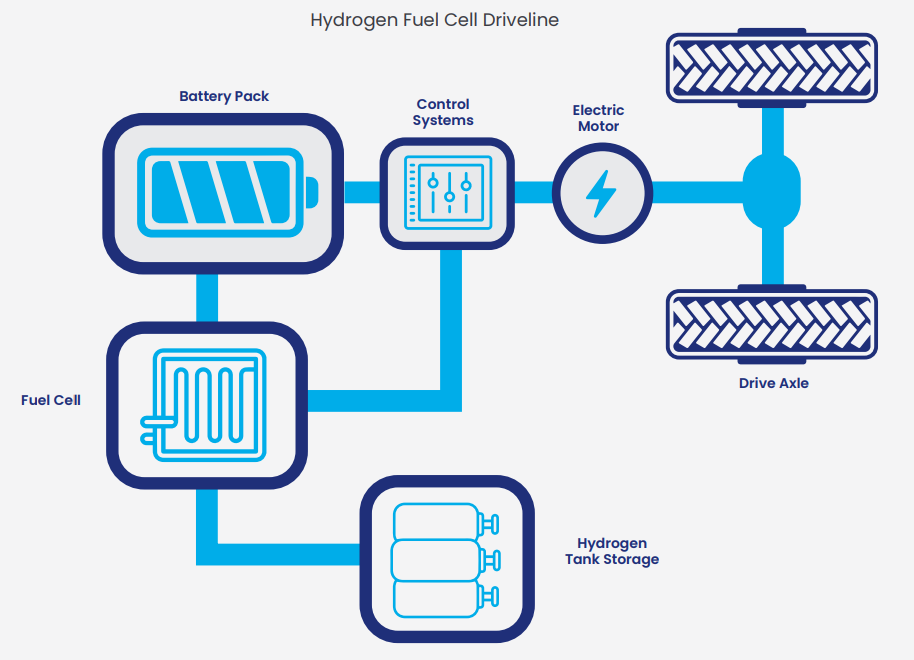
Fuel cell design means they produce a constant power output, so a battery or supercapacitor is needed to act as an intermediary energy store to provide variable levels of power to the motor, as the driver accelerates at different rates throughout the service. As compressed hydrogen is the main energy store, battery packs in FCEVs can be much smaller.
Hydrogen can be produced from a variety of methods, including from fossil fuel based industrial processes to electrolysis of water using renewable electricity. The carbon intensity of hydrogen production needs to be considered when calculating WTW GHG emissions.
Depot-based refuelling
Case Study: Hydrogen Depot Based Refuelling
Operator: Metroline, London
Fleet: 20 x Wrightbus StreetDeck Hydroliner
Infrastructure Provider: NEL / Ryze Hydrogen
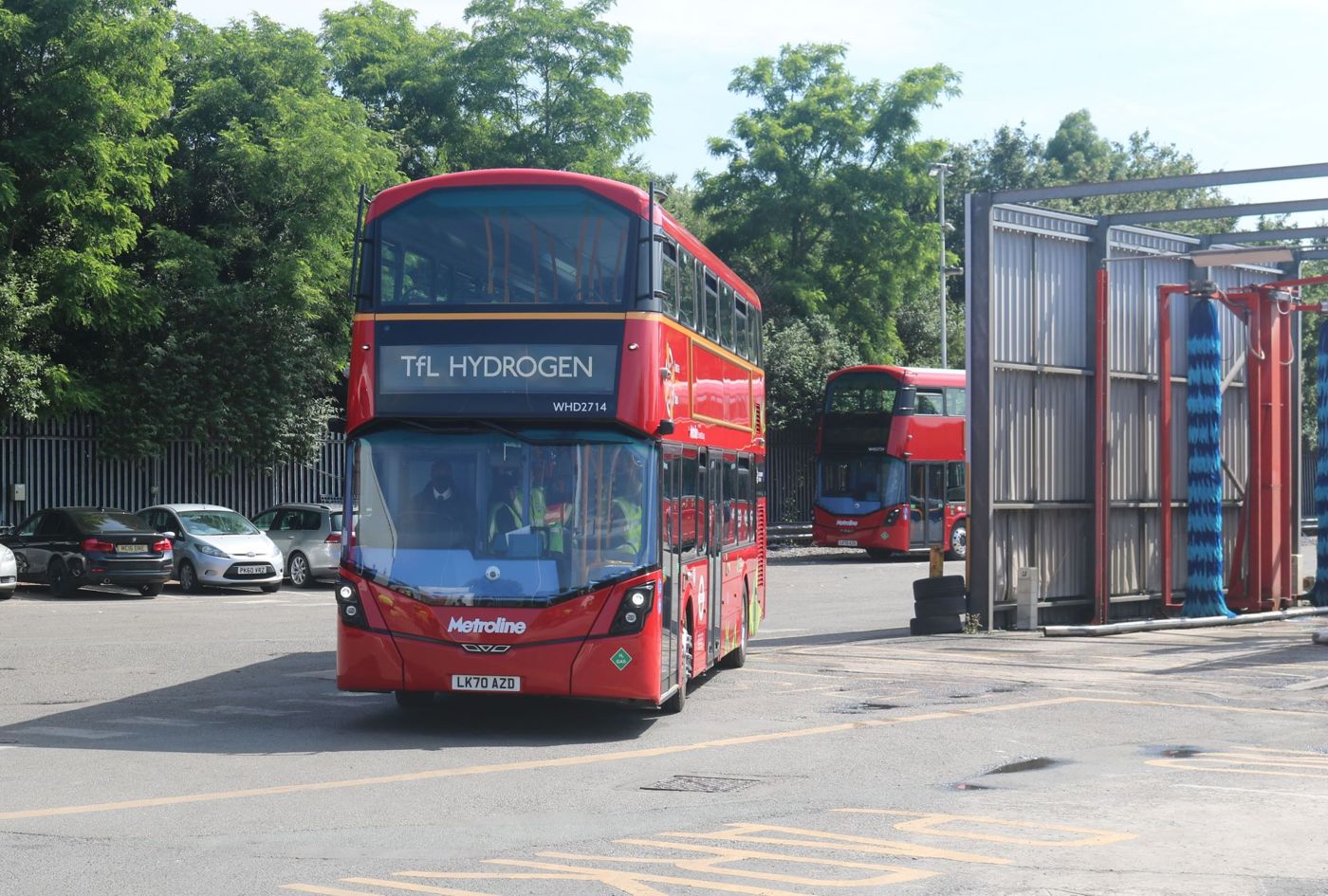
Metroline and Transport for London (TfL) introduced twenty double deck hydrogen FCEV buses to London in 2021, the first such vehicles to enter service in the capital. The vehicles manufactured by Wrightbus, follow historic hydrogen fuel cell trials in the city dating back many years. The buses were jointly funded by TfL and the Office for Zero Emission Vehicles (OZEV) alongside European bodies including the Fuel Cells and Hydrogen Joint Undertaking, and the Innovation and Networks Executive Agency (INEA), an executive agency of the European Commission.
Transport for London has led the way with rolling out zero emission buses in the UK, with almost 900 such vehicles in service today. Mayor Sadiq Khan has the aim to make all London buses zero emission by 2030. The new hydrogen fuel cell double decker buses are first being introduced on route 7 between East Acton and Oxford Circus, based at Metroline's Perivale depot.
The hydrogen for the buses is currently being produced at Air Liquide’s plant in Runcorn, harnessing waste hydrogen as a by-product from an industrial chlor-alkali plant, while Oxford-based Ryze Hydrogen is responsible for transporting the fuel to the fuelling station. In future, the hydrogen is expected to be produced by electrolysis powered by a direct connection to an offshore windfarm. Danish firm NEL Hydrogen installed a refuelling station on site enabling buses to be refuelled once per day in as little as five minutes.
Source: Zemo